Chicory: A Weed or Useful Nuisance?
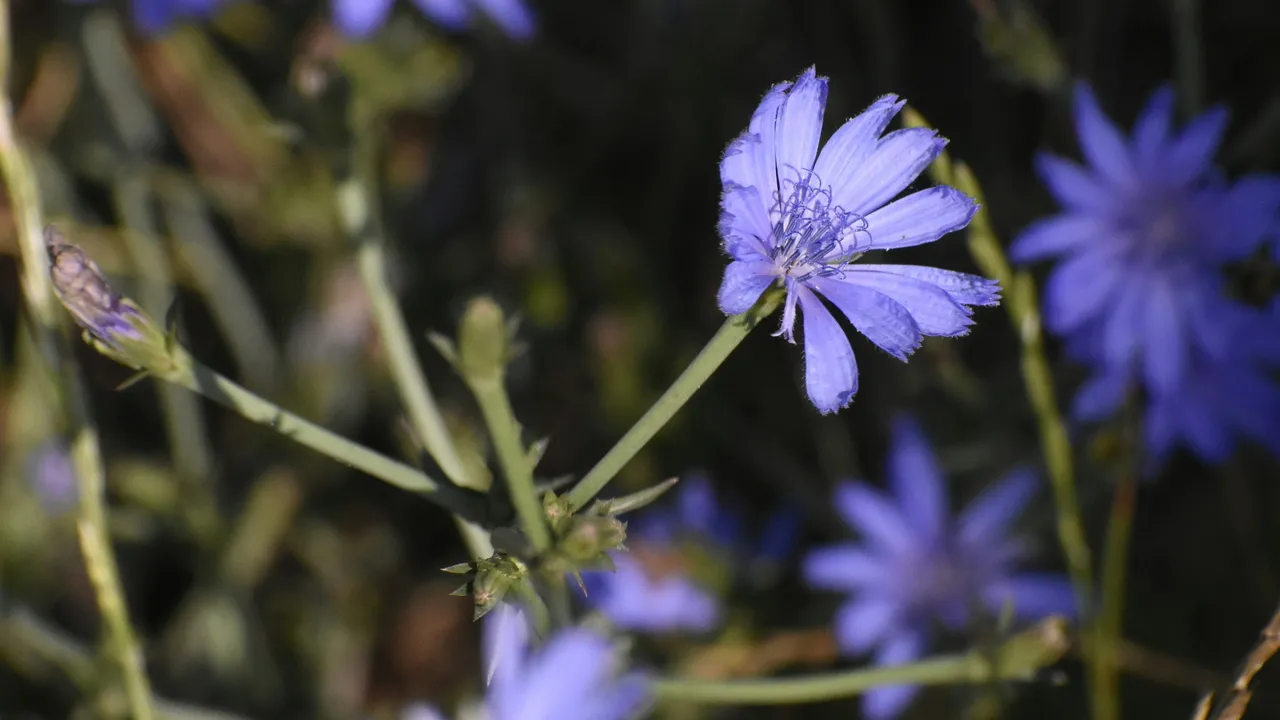
Chicory's blue flowers brighten roadsides across the country, but some states call it a noxious weed. Learn how to spot it, what it's good for and how to keep it in check.
Chicory is a blue flower in the aster family often seen growing on roadsides, along ditch banks and in fields. It's native to Europe, Asia and Africa and has been introduced to other parts of the world as well.
Chicory is often considered a weed because it can be an agricultural pest that takes over fields (even where it's native), it has stubborn taproots and it tends to grow in marginal areas. Because it has spread to many places outside its native range, it may also be considered invasive in some areas.
Chicory is a designated noxious weed in Colorado and New Mexico, which means those states have deemed it destructive. Noxious weed laws vary from state to state, but property owners may be required to kill or otherwise control noxious weeds growing on their land.
How to Identify Chicory
Chicory grows 1 to 5 feet tall. Its hollow green stems have few leaves and contain a white, milky sap. The lower parts of the stems are hairy.
Most chicory leaves look like dandelion leaves and grow at the base of the stem. These leaves are toothed or dissected and may be hairy. Smaller, smoother leaves also grow from the plant's mostly bare stems.
Chicory flowers are bright blue, and their petals have squared-off, toothed tips. The flowers generally open in the morning and close later in the day.
Chicory belongs to the genus Cichorium. Its other relatives in the aster family include daisies, dandelions and sunflowers.
Is Chicory Useful?
Chicory is edible. Its root can be roasted and ground for use as a coffee substitute or additive, which earned it the nickname "coffee weed."
Though bitter, chicory greens are edible too. The leaves are best picked early in the year before they become too bitter. Tender leaves can be eaten as salad greens, and older leaves can be boiled like spinach or Swiss chard.
Cultivated varieties of chicory for the garden include radicchio and Belgian endive.
Varieties of chicory have also been bred for livestock forage. They have nutrient values for livestock similar to alfalfa, according to the Natural Resources Conservation Service.
Chicory has also been suggested for ethanol production. Experiments have shown that, through a process involving fungi, inulin (a carbohydrate found in chicory root) can be turned into ethanol.
Research has also found that inulin may help the body absorb calcium and lower cholesterol.
A weed to some, chicory is a pretty flower to others. Bees and other pollinators enjoy it, and chicory seeds are sold by seed companies. If you choose to plant a flower many consider a weed, remember to be a courteous neighbor.
How to Control Chicory
As a general rule for weeds and pests, chicory can be allowed to grow in manageable amounts unless it becomes a problem. Prevention is also better than costly eradication after it's grown out of control. And remember, chicory is a noxious weed in some states.
Chicory can be controlled without chemicals by hand pulling, digging or using a grub hoe. Deep tilling also works well, and mowing can prevent seed production. Chicory can be grazed, but it may grow back afterward. Planting a dense stand of desirable plants can also outcompete it.
These herbicides are effective on chicory, according to UC Davis:
- 2,4-D
- Aminocyclopyrachlor plus chlorsulfuron
- Aminopyralid
- Clopyralid
- Dicamba
- Picloram
Be sure to consult a professional and read the label before using any herbicide.
Online Chicory Resources
For more chicory articles and information, check out these resources:
- A Northern Nevada Homeowner's Guide to Identifying and Managing Chicory from University of Nevada, Reno Extension
- Cichorium from the UC Davis Weed Research and Information Center
- Chicory, Cichorium intybus L. from Invasive.org
- Chicory from the Colorado Department of Agriculture
- Chicory from the USDA Natural Resources Conservation Service
- Chicory from The Washington Post
- Chicory: Weed or Flower from Penn State Extension
- Chicory's Wide, Green Leaves and Roastable Roots from The Washington Post
- Chicory, Wild Edibles Series by David's Passage on YouTube
- Nature Journal: Chicory More Than a Noxious Weed from the Citizen Times
- Roasting Chicory for Coffee by Homesteading Ways & Beyond on YouTube