Wong Sing, Eastern Utah's Frontier Merchant
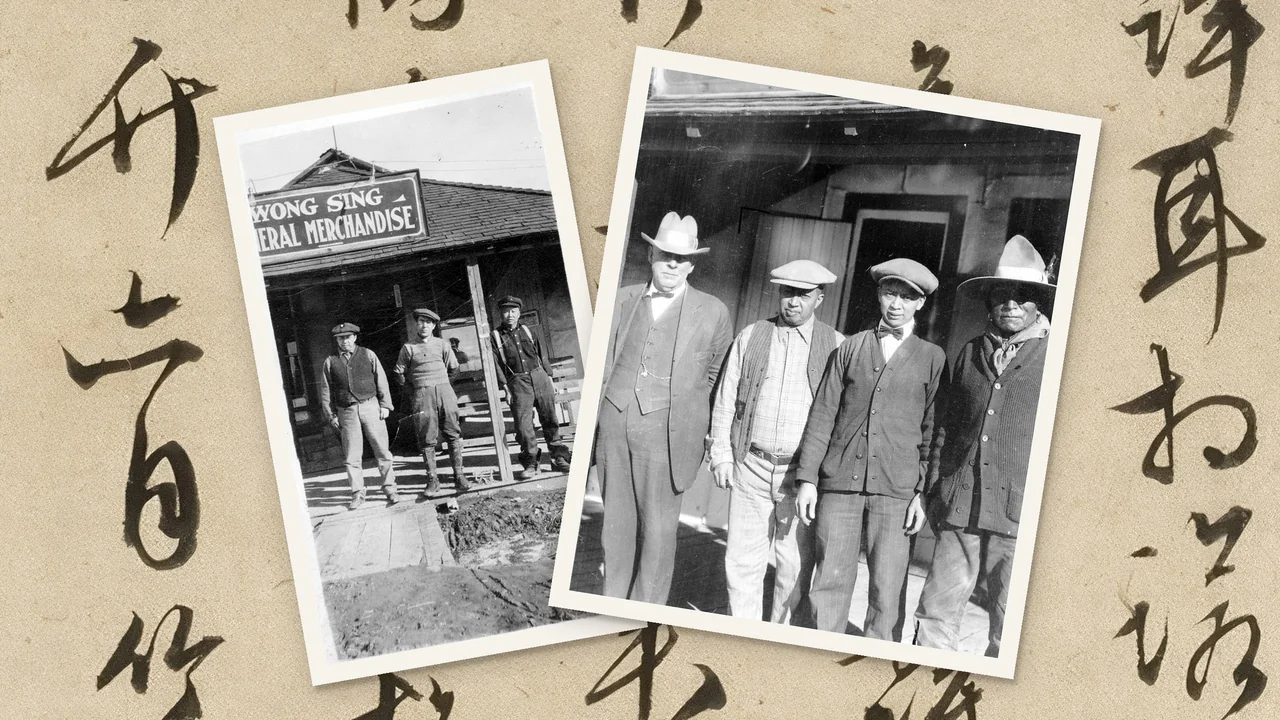
Wong Sing came to Fort Duchesne in 1889 and turned a soldiers' laundry into one of the Uinta Basin's biggest businesses. At his passing in 1934, Ute and white neighbors alike mourned his loss.
When word spread in March 1934 that Wong Sing had died, "the entire populace of the Uintah basin was stunned," according to the Roosevelt Standard. The Fort Duchesne storekeeper had lived in the basin for about 45 years and was "a trustworthy friend of whites and Indians," the paper reported.
Wong died March 19, 1934, when the truck he was riding in overturned on Highway 40 near Snyderville, a few miles north of Park City.
Wong was "more than a successful man, he was an institution," and "Indians and whites alike" mourned his death, according to the Salt Lake Tribune. Many locals believed he was more than a century old, though his age was given as 69. To the Vernal Express, he seemed to belong "to the west that is now so rapidly passing." The Roosevelt Standard called him "a romantic figure of the basin and the west."
From Laundry to Mercantile
Wong was born in Canton, China. He made his way to San Francisco, then inland to Price, and reached Fort Duchesne in 1889 after a journey of more than a week, according to the Tribune. The Roosevelt Standard reported that he first ran a small restaurant in Ouray.
Fort Duchesne was then home to two troops of cavalry and a company of infantry. Wong built a simple laundry on the bank of the Uintah River, the Tribune reported. There Wong took care of "most all the soldiers" and ran a restaurant, which gave him "the financial start that placed him among the basin's richest residents," the Standard reported.
He sold cheap chinaware to officers' wives and homesteaders, pulling it in a little red wagon as he delivered laundry, according to a 1989 Deseret News article by Ruthann Lum McCunn. He later opened a small store that drew Ute customers.
Not everyone welcomed his success. His little store on the fort grounds won the Utes' "entire patronage," which angered several white men, according to the Tribune. They had him removed from government property so they could open a larger store. "They kicked Wong off the government land," his longtime friend B.W. Tembroeck told the paper. Soon after the rival store opened, it burned to the ground.
Wong bought a few acres a mile and a half northeast of Fort Duchesne, across the Uintah River, and built a new store. As business grew, he kept adding on. At his peak, from 1927 to 1929, he employed eight clerks and ran a furniture store, a general store and a meat market with $60,000 to $70,000 in stock, according to the Tribune.
Friend to the Ute People
Wong spoke little English when he arrived, and there were some words "he never mastered," according to the Tribune. Ute was another story. He was said to speak it better than most of the Utes themselves. Anyone who visited his store "could very readily see that he had not only mastered the language, but had entirely won the confidence" of his customers, according to the Roosevelt Standard.
He traveled into Navajo country to trade for rare rugs. At one time he had more than $5,000 worth on hand, and wealthy buyers from the East made special trips to the basin to buy them, the Standard reported.
Each year he designed and gave out calendars with a Native American theme, McCunn wrote. He also shot motion pictures of tribal customs and lent many of his films to government officials. After his death, "sixty Ute braves assembled at the office of the agency superintendent at Fort Duchesne" in a tribal council to honor him, the Tribune reported.
A Generous Neighbor
Wong's bankers said he was "a very shrewd business man" who added figures "almost as fast as an adding machine." He was also "a free giver to any worthy cause," and "many is the poor farmer he has helped," the Roosevelt Standard reported.
When the Depression hit, Wong eased up on credit. If a rancher asked for time to pay, he would say, "It is not my policy to extend credit, but you need the goods," and let him take them, according to the Tribune.
He had powerful friends. "Wong Sing was one of the greatest characters I have ever met," L.W. Page, superintendent of the Fort Duchesne Indian agency, told the Tribune. A few days before he died, Wong got a letter from Gen. Hugh L. Scott, whom he called "my friend General Scott," the paper reported.
Those ties helped bring his son, Wing, to the United States in 1924. Immigration officials in San Francisco at first refused to let him in. A friend wired Sen. Reed Smoot, who persuaded officials to release him, McCunn wrote. Wing, listed in records as Wong C. Wing, worked in the family store. Whether he was Wong's son or nephew was "a moot question," the Tribune reported.
A Final Trip
Wong and his driver, store employee Homer Haynes, were headed to Salt Lake City to buy stock for the store, according to the Roosevelt Standard. Wong was also going to see a doctor, McCunn wrote.
The truck was apparently traveling at high speed, according to the Express. A large car honked, passed the truck and cut back in too soon, Haynes told the Standard. He swerved onto loose gravel to avoid a crash and lost control. The truck struck a boulder and rolled six or seven times, according to Coroner John C. Green. Wong was found dead 65 feet from the truck. Haynes was thrown 160 feet and survived with a broken leg, cuts and bruises.
Wong's body was shipped to Denver. Wing went with it, and it was cremated there "in accordance with Chinese custom," the Tribune reported. His remains were to be buried in Vernal until they could be sent home to China, according to the Roosevelt Standard.
Wong C. Wing kept the business growing. In 1938 he opened a new store on Highway 40, and in 1951 he opened a second store in the heart of Vernal, according to a 1958 Vernal Express article. He died Nov. 22, 1952.
Wong C. Wing's wife, Jennie Jue Wing, whom he married in 1938, carried on his "traditions and policies," the Express reported. She became known for fitting people with corrective shoes, and doctors sent patients to her. In 1958, citing her health, she sold the Fort Duchesne store and moved to Vernal to run the store there.
A Lasting Gift
Wong Sing's generosity outlived him. He left $500 in a trust fund for a new Uintah County hospital, a gift no one knew about until after his death, according to a 1943 Express article. The money sat untouched for several years. By 1943, largely through the work of the Vernal Chamber of Commerce, the fund had grown to $6,400, the paper reported.