Nature's Bittersweet Staple: Chokecherry's Importance Across Habitats and Cultures
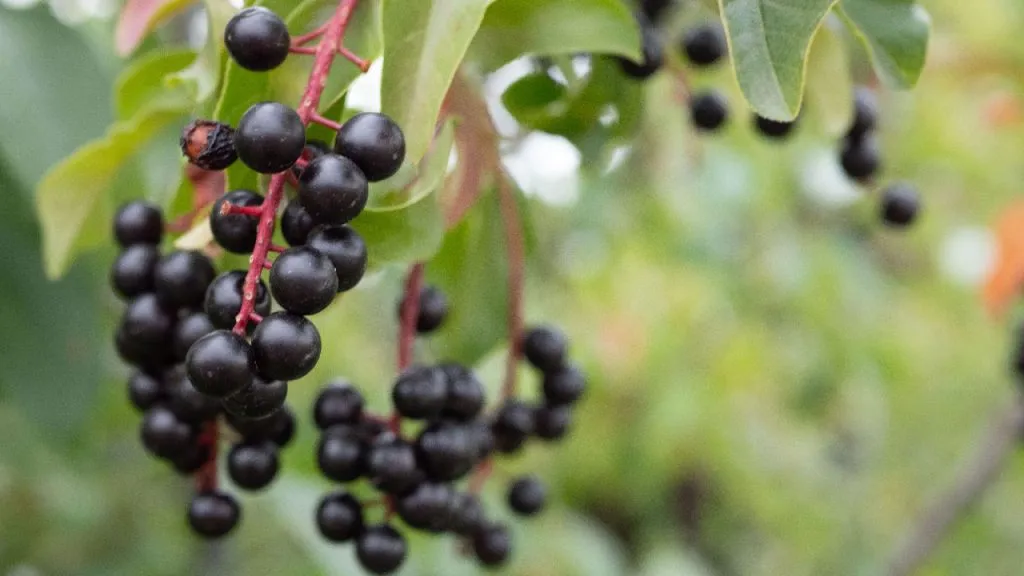
Chokecherries feed birds, bears and bees. They've also long been a staple food for Native American tribes and frontier settlers.
Like many fruits, chokecherries are members of the rose family. The plants can grow as trees as tall as 25 feet, but they often take the form of shrubby bushes. Their leaves are dark green on top and lighter green on the bottom. Leaf edges are serrated or "sawtoothed." The bark of young chokecherries is smooth and gray to reddish-brown. The bark darkens and becomes more scaly as the plant gets older.
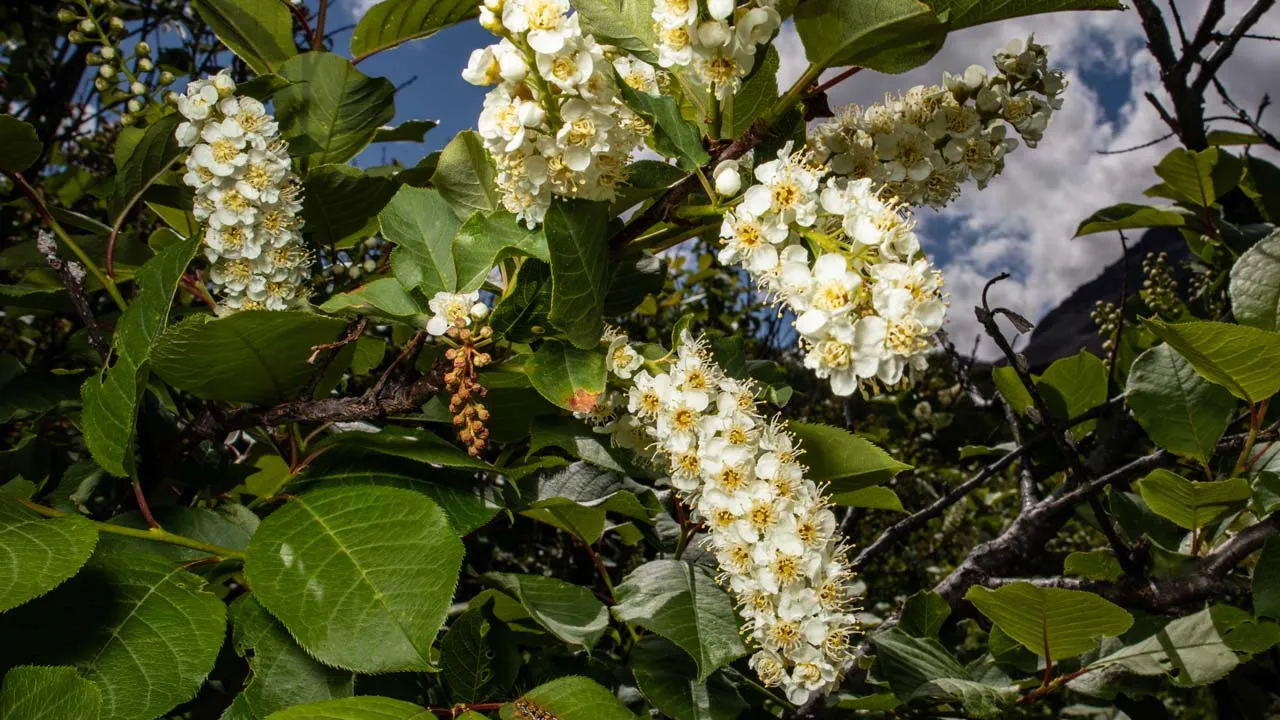
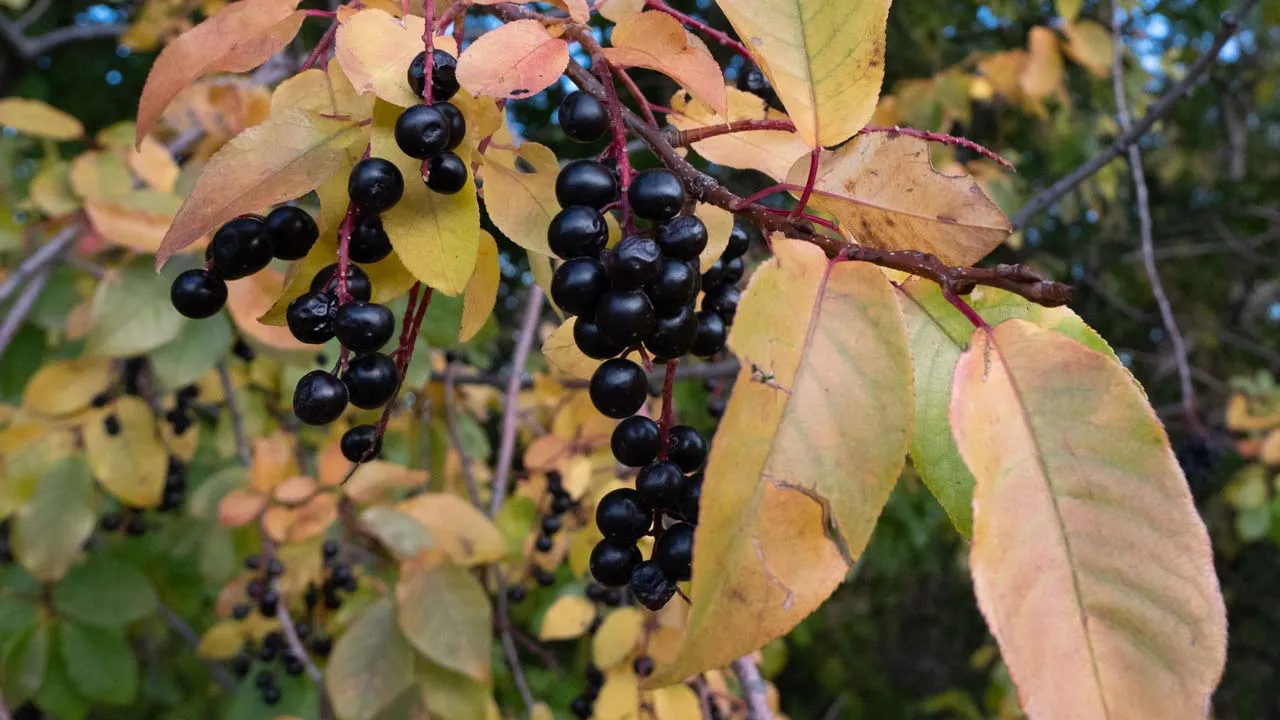
Chokecherries produce clusters of small, cascading white flowers in spring. The pollinated flowers develop into fruit that starts out green. The fruit then turns red. When ripe, it's often described as black or dark purple. The fruit grows in clusters, and each cherry is mostly a pit surrounded by a bit of tart to sweet flesh.
Chokecherry Habitat
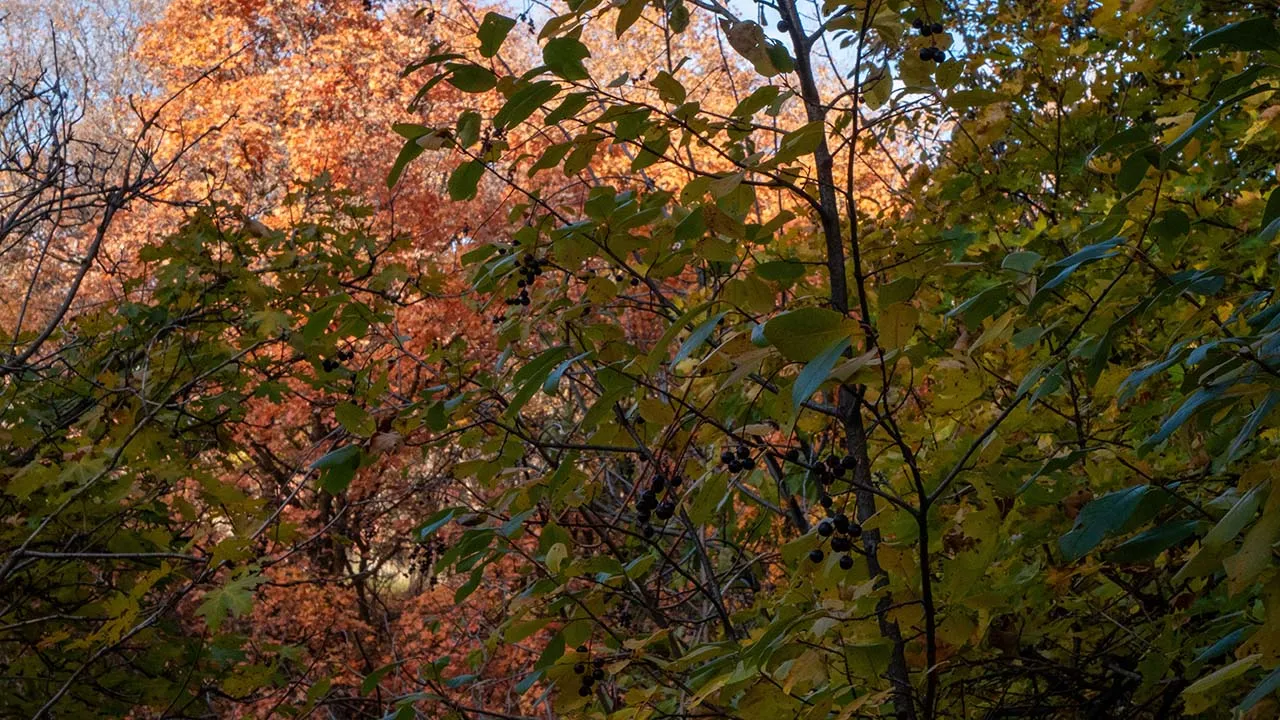
Chokecherry grows in a variety of conditions across temperate North America, excluding much of the southern United States. It grows in canyons, ravines, mountains, foothills, woodlands, forest edges, clearings, roadsides, fields and streamsides. It often grows in thickets and spreads by underground runners. It prefers moist to dry alkaline soils and full sun to partial shade.
Wildlife Uses of Chokecherry
Chokecherry blossoms attract pollinators like native bees as well as honeybees, bumblebees, butterflies, ants and moths.
The berries are a source of food for wildlife like birds and rodents and omnivores like bears. Birds and other wildlife often spread the seeds through their droppings. Despite their toxicity, chokecherry leaves are also browsed by hoofed animals like deer.
Chokecherry trees and bushes also provide habitat for nesting birds and other animals. Tent caterpillars often weave their silk homes on chokecherry branches, and chokecherry leaves are among their preferred foods.
Uses of Chokecherries Across Cultures
Chokecherries have long been a source of food for humans. The fruit is often described as astringent. The berries are usually cooked or dried to reduce any bitterness before eating. Very ripe fruit is mildly sweet.
Traditional Native American Uses of Chokecherry
Chokecherries are often an ingredient of pemmican, a mixture of tallow, dried meat and sometimes dried berries, which has been a traditional staple of Native American diets.
Another traditional use of chokecherries is to grind or pound them, seeds and all, into patties for later use. The patties are dried (or perhaps frozen nowadays), then boiled and thickened into a pudding or sauce.
Other traditional Native American uses of chokecherry include natural dyes. Chokecherries have also been used for medicine, including medicinal tea made from chokecherry bark. Chokecherry wood was also used to craft bows, arrows and other items.
Chokecherries Among Utah's Native Peoples
Each of Utah's Native cultures has its own uses and names for chokecherries.
Ute
Ute people ate chokecherries raw or as a pudding. The Ute word for chokecherry is töö'nap(ü).
Shoshone
The Shoshoni word for the berry is to'nampih, the bush is toonkisappeh and the leaf is tongisape.
Goshute
Like other tribes, the Goshute dried mashed chokecherries and stored them in pits for winter. They would later boil the fruit, sometimes with meat. They also made a drink from scrapings of the wood to treat bowel trouble in children. The Goshute word for the berry is toonampih, and the plant is toonkwisappeh (Goshute is a dialect of Shoshoni).
Paiute
Paiute people ate and made tea from chokecherry leaves and twigs to treat colds and rheumatism. The Southern Paiute word for chokecherry is toanup'.
Navajo
The Navajo word for chokecherry is didzédik’ǫ́zhí.
Other Uses of Chokecherry
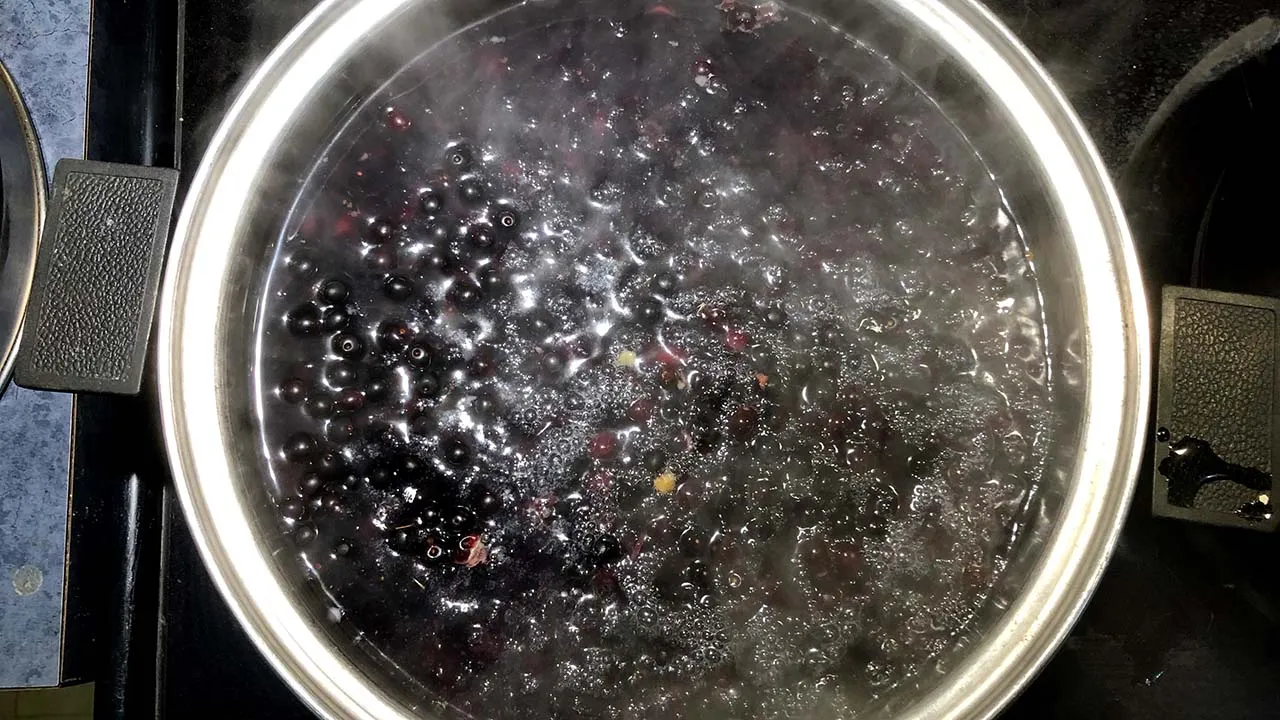
Once settlers arrived, they found their own uses for the fruit. Chokecherries are used to make preserves, juice, jelly, syrup, pie filling and wine.
For chokecherry jelly and syrup recipes, see University of Wyoming Extension's publication Preserving Food in Wyoming. For more jelly recipes, see North Dakota State University Extension's publication Jams and Jellies from Native (Wild) Fruits.
Planting Chokecherry Trees
Chokecherry plants are grown as ornamentals, mainly for their abundant springtime blossoms, and as a source of food.
When planting chokecherries, remember they prefer direct sunlight and don't do well in heavy clay. They prefer moderate moisture (areas receiving 13 to 65 inches of annual precipitation). They're found naturally in hardiness zones 2 to 7, but they can be grown in zones up to 10.
Chokecherry Toxicity
Chokecherry seeds, leaves, stems and bark are toxic to humans, wildlife and livestock like cattle and sheep. These parts of the plant contain hydrocyanic acid, a source of cyanide.
Online Chokecherry Resources
For more chokecherry articles and information, check out these resources:
- Astringency Isn't A Flavor; It's A Sensation!: An article about the astringency of chokecherries by Daniel Vitalis, host of WildFed on the Outdoor Channel.
- Chokecherries Invite Pollinators and Frugivores, but Poison Herbivores: An article by University of Colorado Professor Jeff Mitton in CU's Colorado Arts & Sciences Magazine.
- Chokecherry: Information from the Foods Indigenous to the Western Hemisphere section of the University of Kansas American Indian Health and Diet Project website.
- Chokecherry (aka Capulin): Identifying Plants, Harvesting Fruit, and Making Jelly: A publication from New Mexico State University Extension agent Suzanne DeVos-Cole.
- Chokecherry, Native Memory Project: An article and videos presented by Crow historian Grant Bulltail and self-taught naturalist John Mionczynski, describing chokecherry and its uses among Native American groups.
- Chokecherry Plant Guide: Plant information from the USDA Natural Resources Conservation Service.
- Chokecherry, Prunus virginiana: A profile from the University of Minnesota's Urban Forestry Outreach and Research Nursery & Lab.
- Chokecherry Wojapi by Mavis Two Bulls and Rachel Nava: A video of two sisters making their version of Lakota chokecherry wojapi from South Dakota Public Media's Savor Dakota program.
- Common Chokecherry: A plant profile from Washington College in Maryland.
- Prunus virginiana: A profile from the North Carolina Extension Gardener Plant Toolbox.
- Tent-Making Caterpillars: Information on caterpillar species that weave silk tents from Colorado State University Extension.
- The Most Common Native Cherry in CO: A post from Forage Colorado, a website by Orion Aon, a natural resources professional in state forestry.